Dexter's 1993 drug-fueled night out
One DayDexter’s 1993 drug-fueled night out is a revel in borrowed intimacy that ends with dread breaking through the party’s promise of belonging. On 15 July, after a night of dancing, new acquaintances and drugs, Dexter finds himself unable to bear the prospect of going home alone. His sudden longing for Emma Morley exposes a feeling he has been avoiding, while the first light of morning finds him hiding behind a refrigerator to drink vodka before facing the day.
Setting and Circumstances
The episode belongs to Part One, Dexter’s story, and takes place across a single night that runs into morning. The narrative notes that nights and mornings have begun to blur for Dexter: old distinctions between a.m. and p.m. seem obsolete, and he sees more dawns than he used to. On this particular date, the sun rises at 5:01 a.m. He watches it from the back of a worn-out minicab on his way home from a flat in Brixton.
The night began after two in the morning, in a nightclub beneath railway arches. Dexter notices Tara on the dance floor, where she moves among strangers, grinning and rubbing their shoulders or lower backs. When she reaches him, she recognizes him as famous. Their meeting takes shape through dancing and touch rather than formal conversation. Dexter treats the club’s drugged ease as a shortcut to intimacy: instead of the cautious questions and purchased drinks he associates with an older style of courtship, conversation can jump straight to personal disclosures. The scene’s comic lightness depends on how readily he mistakes that lowered inhibition for progress.
The Party and Its Temporary Belonging
The club is expensive and presented as upmarket, though Dexter rarely pays for anything. It is quiet for a Thursday, and its crowd suits him better than the intimidating clubgoers he dislikes: attractive, middle-class people in their twenties, gathered on cushions to smoke, talk and share gum, water and Marlboro Lights. Among Tara’s friends he meets a graphic designer whose name he cannot keep straight, The Lovely Tash, her boyfriend Stu Stewpot, and Spex and his boyfriend Mark. Their hospitality makes friendship seem effortless. Dexter imagines the group taking camper-van holidays and having beach barbecues, and he enjoys being asked about television and the famous people he has met.
Tara remains behind him, massaging his neck and shoulders with small, bony fingers. Dexter responds with elation, while the group’s questions and attention reinforce the pleasure of being recognized. Callum O'Neill is also there. He tells Dexter that he is off his face and that he will call the next day; Dexter hugs him, praises him, and then lets Tara lead him back into the crowd.
The company briefly interrupts Dexter’s awareness of an obligation waiting later that day. During a lull, however, he remembers what he has to do, and panic begins to intrude. The group returns to dancing, but its confidence has thinned: smiles and nods now seem to reassure everyone that the night is still enjoyable. When one of the men complains that the music is bad, the dancing stops at once. The moment punctures the party’s fragile collective mood, and Dexter starts imagining the journey home, the cab drivers outside, and the empty hours waiting in his flat.
Emma Morley and the Fear of Being Alone
At the prospect of going home alone, Dexter looks for a payphone and considers whom he might call. He dismisses several possibilities, including Callum O'Neill, and thinks of Emma Morley. He tells himself that she would not understand his present state and would not approve of it; nevertheless, she is the person he most wants to see. The contrast between his reluctance to involve her and his urgent desire for her company makes the thought more revealing than a casual late-night impulse.
Dexter imagines that he and Emma would make a good team and thinks of them as a pair. He is surprised by the force of his affection and considers going to Earls Court to tell her that he loves her and finds her attractive. Even the possibility that they might simply sit up and talk seems preferable to being alone. Before he acts on the plan, the graphic designer suggests that the group go back to his nearby flat. Dexter follows the crowd instead, and the proposed visit to Emma remains unrealized in this episode.
Morning and the Return of Dread
At the flat, an open-plan space above an old pub, the company sprawls across a four-poster bed covered in synthetic animal-print and black sheets. A mirror hangs above them. They listen to music, touch hands, kiss, and make personal disclosures they may regret later. Dexter again feels part of an attractive, successful group and imagines future picnics and Sundays together. The scene’s expansive friendliness is temporary: it depends on the night’s altered state and on everyone’s shared belief that the new acquaintances will remain close.
As the drugs wear off, Tara’s massage changes in Dexter’s perception from soothing to painful. Her fingers feel like jabs and pokes; her face seems pinched and menacing, and he becomes newly conscious of her age and of white paste between her teeth. These are details as Dexter sees them while dread, fear and shame rise into a physical sensation, described as sticky chemical sweat. He sits up, shivers, and drags his hands down his face as though trying to wipe something away.
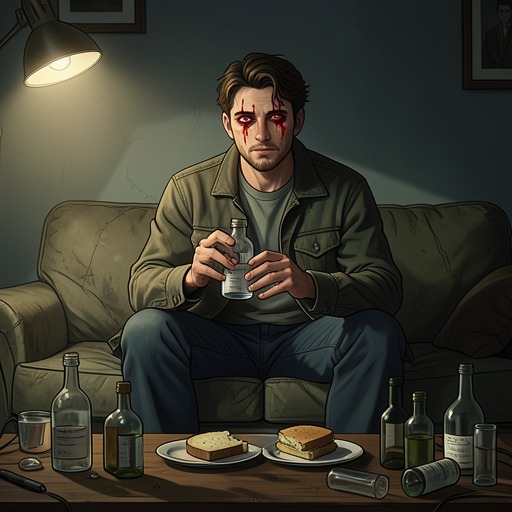
By dawn, blackbirds are singing on Coldharbour Lane and Dexter feels hollow. The music has stopped; someone asks for tea, and the whole group seems to want it. At the refrigerator, Dexter sees a rotting salad in a swollen plastic bag and then a bottle of vodka. Hidden by the open door, he drinks roughly two inches and follows it with a sour gulp of apple juice. The night therefore ends not in the lasting friendship or escape he had imagined, but with the return of solitude’s dread and an act of drinking before the day ahead.